Tag: culture

  • Right-Wing Rhetoric, Real-World Consequences: York Chinese Restaurant Attacked

    Right-Wing Rhetoric, Real-World Consequences: York Chinese Restaurant Attacked

    This last week, the Dragon House Chinese Takeaway in York was defaced with racist graffiti. Crude St George’s flags were painted across the shopfront, the word “Chinese” was scratched out, “Cat N Dog” was sprayed onto the window, and on the side of the building, vandals scrawled the words “Go Home.”

    Screenshot

    On a street lined with shops, only the Chinese takeaway was targeted, which in itself is telling of the motivations for this attack. Moreover, it speaks to a longer history of racism faced by the Chinese in Britain, from their arrival in the 19th century, the discriminatory acts of Parliament in the first half of the 20th century, xenophobic cartoons in the Sun newspaper in the 90’s, through to the surge in anti-Asian hate during the Covid-19 pandemic, and now this latest act of hostility.

    Yet, from the post-war era onwards, Chinese restaurants and takeaways have established themselves within the very fabric of British high streets, moving from the margins to the mainstream. This love of Chinese food in Britain is demonstrated by a report by Market Intelligence, which indicated that by 2001, Chinese cuisine was Britain’s favourite food, with 65% of households owning a wok.

    In addition, the contribution of Chinese migrants to Britain extends far beyond food. A 2006 Home Affairs Committee report estimated that up to 90% of Chinese migrants had previously worked in the catering industry. However, by 2022, those identifying as Chinese or British Chinese reported a median hourly pay of £17.73, the second-highest among any ethnic group, just behind White Irish.

    This shift from a community engaged in low-paid catering jobs to becoming the most successful migrant group originating outside of the British Isles is mirrored in educational performance. By the 1990s, many second-generation Chinese migrants were leaving catering for higher education and professional careers. The 2011 UK Census revealed that 87% of young Chinese people aged 16–24 were in full-time education, the highest proportion among all ethnic groups in Britain.

    Despite these markers of success and integration, the Chinese in Britain are far too often perceived as outsiders. This contradiction was painfully exposed during the COVID-19 pandemic, when racist hashtags targeting Chinese people rose by 300% and restaurants faced boycotts, abuse, and vandalism.

    Today, the rhetoric of Britain’s right-wing not only risks heightening prejudice towards migrants but is undoubtedly fuelling this prejudice to increasing extremes. For example, the political party Reform UK has pledged to forcibly remove up to 600,000 migrants, while even the Labour Prime Minister, Sir Keir Starmer, has described Britain as an “Island of Strangers.”

    Such language — often aimed towards the media fodder that is irregular migration and small boat crossings — emboldens racists, granting them confidence and a sense of legitimacy to target migrant communities. Whether the migrant group has already contributed significantly to British life, or has the potential to contribute is of no consequence to the proprietors of prejudice. 

    In the case of the Chinese in Britain, this contribution is evident through economic success, education, and notably our national palate. All of which is overlooked by those who attacked the Dragon House in York.

    In contradiction to long-standing migrant endeavours, Reform UK argues that multiculturalism has failed, claiming it breeds “separate communities” and insisting migrants must immediately assimilate into British society. However, I argue assimilation is not instantaneous and is, for most migrants, impossible to achieve over a single generation. 

    Assimilation is preceded by integration, a process that requires time, opportunity, and mutual buy-in from both the host and migrant communities.

    Language, religion, and physical differences are among the barriers to integration that migrants face. These cannot be erased overnight or even over several generations. These differences demand patience, respect, and recognition from both migrants and the host society. Integration, as Leo Lucassen argues, is not a one-way process. Migrants change through contact with the host society, but the receiving society also changes, often slowly and imperceptibly to most observers.

    Seen in this light, assimilation should not be framed as a short-term political ultimatum or as a populist demand to whip up the eager right-wing on social media platform X, which increasingly spills over into damaging real-world consequences. Instead, integration and assimilation should be understood as part of a long-term social process that has shaped Britain throughout her history.

    From the Romans, Normans, and Irish in the 19th century to today’s migration, whether regular or not, Britain has always been shaped by waves of migration. As seen through the example of the Chinese in Britain, migrants have enriched and added colour to society. If not met with tolerance, curiosity, and acceptance, the slow and often imperceptible integration process will undoubtedly be extended.

    That message, however, is unlikely to come from the government or even the press. Which is why the responsibility falls to society’s tolerant majority. By doing so, we can be resistant to the seeming importation of American culture wars and, in the process, define ‘patriotism’ as caring for all who call Britain home, whether they were born here or arrived later. Those who believe in love, inclusion, and community must be louder than the hate-filled minority who currently dominate the conversation.

    When one Chinese takeaway in York is attacked, it is not just one family’s business under attack; it is the very idea of what Britain is, and what it can be.

  • The Fluidity of ‘Authentic’ Food in Multicultural Britain

    The Fluidity of ‘Authentic’ Food in Multicultural Britain

    Over the few last months, in the context of diasporic food in Britain, I have written the words ‘authentic’ and ‘authenticity’ many times. Within this process, I have begun to ask myself a series of questions: What is authentic food? Is our perception of authenticity linked to our understanding of a dish’s origin, its assigned national identity, or its ingredients and cooking methods? Or is the authenticity of a dish something far more flexible, something that adapts and changes over time?

    Historically, the definition of ‘authentic’ has adapted and changed. The etymology of the word can be traced to multiple origins, partly borrowing from French and Latin. In Anglo-Norman, Middle French or Old French the term often referred to legal documents, echoing the latin authenticus. According to the Oxford dictionary, authentic means “genuine; not feigned or false” when referencing a document, artefact or artwork; concepts contemporarily tied to Western ideas of intellectual property. Another interpretation from the dictionary is that authenticity is the “actual thing or person; that rightly or properly bears the name.” Yet, none of these definitions serve to clarify what we mean when we apply concepts of authenticity to food. 

    To try and understand what authentic means in a gastronomic context, we should first understand how foods have been assigned national identities through the 20th and 21st centuries. Drawing from historian Professor Panikos Panayi’s book Spicing up Britain, in the era of post-war nationalism, food, like everything else, has been assigned a national identity. However, Panayi highlights that even at this nationalistic level there are conflicting interpretations. In the British context, for example, there is on one hand a simplistic view of British food, as a plain and traditional cuisine consisting of well done roast beef and soggy Yorkshire puddings. Whereas, on the other hand, a more multicultural viewpoint is emerging, which includes the rice noodles of Southeast Asia and the delicacies of the Mediterranean integrated within Britian’s culinary identity.

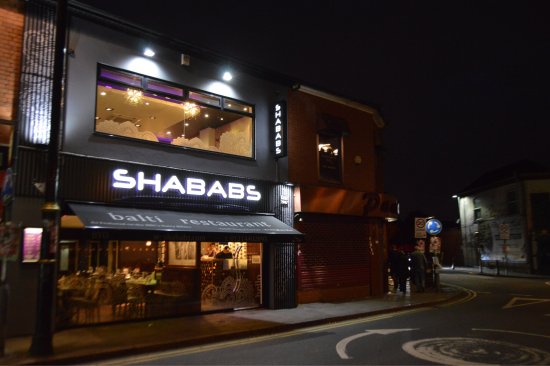
    In modern Britain, a multicultural viewpoint holds significance. Throughout the latter half of the 20th century and into the 21st century, Chinese and Indian restaurants have become woven into the social fabric of rural and urban Britain. Such restaurants often offer anglicised versions of diasporic food, adapted to suit the British palate. Whilst on some occasions this adaptation becomes invention, a prime example of which, is the balti; an original dish created in Birmingham during the 1970’s. The balti has become so iconic that the area it appeared —between Balsall Heath and Sparkhill, home to one of the largest Pakistani Kashmiri migrant populations in Britain — has long been known as the ‘Balti Triangle’. Meanwhile, the dish’s success has enabled the emergence of businesses such as the Birmingham Balti Bowl Company.

    Although, we may go on to ask, can we ever label an adapted or invented dish as authentic? And if so, is it the ingredients or cooking methods that influences our perception of authenticity? By taking a longer-term historical view, we can attempt to answer these questions.

    J.A.G Roberts, In his book China to Chinatown demonstrates how certain foods become integrated into a ‘national’ cuisine. Roberts explains that foreign-introduced crops to China, such as Irish potatoes, maize and peanuts were initially labelled as “fan” (foreign or barbarous), yet they became naturalised in Chinese cuisine over time. For example, the potato, now widely consumed across China, was once unknown to Chinese chefs. Instead, it spread widely in the Qing dynasty(1644–1911). This interchange between foreign origin and localised adaptation highlights the fluidity of authenticity, which can be applied to diasporic contexts such as restaurants in Birmingham’s Balti Triangle or across Britain’s Chinese restaurants or takeaways.

    This process of global culinary interchange demonstrates that authenticity is not an inherent quality but a negotiated and socially constructed concept. The balti is an example of this process, its ‘naturalisation’ within Birmingham and the South Asian community that migrated to the city, shows how food evolves across different culinary landscapes, through migration, adaptation and cultural interaction. While further demonstrating that the diasporic construction of a dish — its cultural significance, its role in providing a means of economic survival for migrant communities, and its vast enjoyment by the British public — holds as much significance in determining ‘authenticity’ as the migratory history of its ingredients and cooking methods.

    However, even if we determine authenticity based on the flexible criteria outlined above, one question remains. If, for example, Indian migrants, adapt the food they serve in their host society, does that food become authentically British, authentically Indian, or authentically Indian British?

    After spending a lot of time seeking an answer to this question, I am no longer convinced that providing a definitive answer really matters. The point is, that authenticity remains vague, fluid and flexible. As migrants, over time, integrate into new societies introducing new ingredients, techniques and flavours, at the same time their host societies also adapt embracing new flavours and innovations. In this integration process, we witness and taste the ongoing exchange of ideas and identities, which is perhaps, the most authentic thing of all.