Category: Uncategorized

  • How was the colonial economy in Africa based on exploitation?

    How was the colonial economy in Africa based on exploitation?

    I wrote this essay in 2024 and have been meaning to share it for some time:

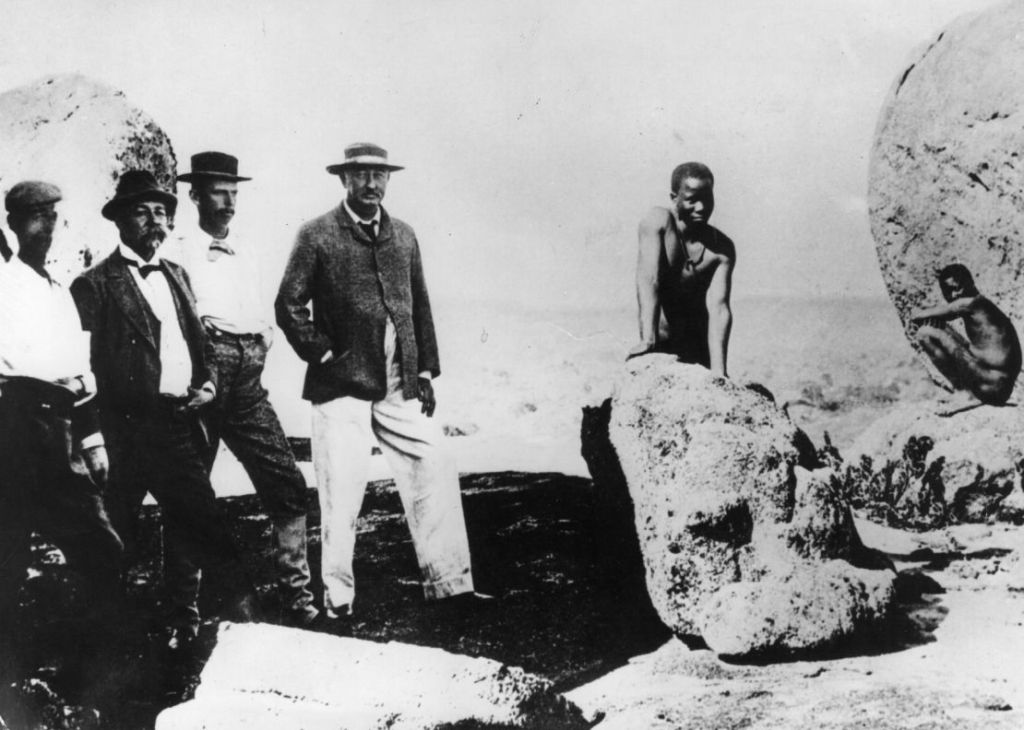
    This essay argues that the colonial economy in Sub-Saharan Africa, following the scramble for Africa, which extended from 1879 to circa 1905, was systematically based upon exploitation that greatly contributed to European development. Firstly, it is important to recognise the heterogeneity of the African continent, from geography to the varying forms of colonial oppression, including direct rule, indirect rule, and settler rule. Each variation of colonial rule imposed unique administrative structures and differing levels of racist and exploitative methods, that constitute just a few of the complexities that fall outside this essay’s scope. Despite these complexities, there are significant commonalities across these systems that allow this essay to carry out a broader analysis of colonial economic exploitation. Including the systematic dispossession of land, the imposition of exploitative labour practices, and the restructuring of African economies to serve European industrial needs.

    There have been two dominant schools of thought in response to the discussion of colonial exploitation. One side of the argument, in which apologists for colonialism, such as Niall Ferguson, argue that colonial powers brought capital investment to colonies, resulting in improved infrastructure, while suggesting that Africa’s prospects for civilisation and modernisation were improved through the imposition of colonialism. However, this essay subscribes to the adversus of the apologist standpoint, as it fails to acknowledge the human, economic and long-lasting impact of systematic exploitation that distorted African economic structures outweighing any perceived benefits.

    In justifying this essay’s position, it is not enough to outlay the motives of European colonial exploitation, as this only serves to focus the puzzle upon the culpability of European Nations. Instead, this essay will demonstrate how colonial powers established and maintained economic exploitation, aiming to recognise the long shadow of colonialism that extends into the present while appreciating Africa’s significant contribution to European economic development.

    It is imperative to recognise that it is no coincidence that the scramble for Africa followed the emergence of the European Industrial Revolution. This period of industrialisation marked the end of feudalism in Europe, which had been completely replaced with capitalism, leading to a situation where industrial progress outpaced agricultural progress, and the demands to sustain the European industrial system increased dramatically.

    To satisfy such demand, European colonialists aimed to exploit the vast resources of Africa. However, instead of working with African rulers to purchase resources, as they had done when trading enslaved Africans, Europeans moved to portion Africa and her resources up for themselves. Whilst European ships could previously dominate the coastlines of Africa, Europeans could not penetrate the African interior as the balance of force at their disposal was inadequate. This forced collaboration, giving local leaders agency to trade on terms that suited their indigenous economic needs.

    Improved military technologies, such as breech-loading rifles and machine guns, which replaced the smooth muzzleloader and flintlock, allowed Europeans to extend upon pre-colonial levels of exploitation. However, a systematic approach to colonial economic control was required to ensure stable resource extraction in supplying the colonial factories. Establishing colonial systems included reorganising the African economy, which included the introduction of cash crops, acquisition of land, enforced labour, and introduction of taxes and colonial currency. These Colonial demands meant more than merely introducing European capitalist systems to facilitate exploitation. Instead, they resulted in the dismantling of the pre-existing vibrant and varied socio-economic structures and systems constructed upon unequalled sub-Saharan principles of communalism, kinship, or extended families.

    The coveting of foreign resources did not go unnoticed by influential Nigerian poet and critic Chinweizu, who noted that when Europe pioneered industrial capitalism, her demands on the world increased tremendously and that Europe set out to seize the world’s mineral and agricultural resources. In the tone of Chinweizu, we can establish how colonialists hijacked, seized, and exploited vibrant pre-existing Indigenous economic systems by looking individually at colonial policies of cash crops, land ownership, the introduction of colonial currency and tax systems, and finally, education and administrative systems.

    The introduction of cash crops during the colonial period highlights the exploitation and disregard for the sustainable agricultural production of pre-colonial Sub-Saharan Africa. Through production policy, colonial powers prioritised cultivating cash crops such as cocoa in Ghana, coffee in Kenya and Uganda, groundnuts in Senegal, and cotton in Mali, Sudan and Chad, aligning African economies with capitalist global trade demands. In regions like West Africa, smallholder farmers became central to the production of these crops, but colonial policies aimed to limit financial rewards for crop production. Moreover, while cash crop regions occasionally experienced localised economic gains, these gains came at the expense of nearby areas, which were marginalised and underdeveloped as labour and resources were diverted.

    The extractive nature of this system ensured that most profits from cash crop production were repatriated to Europe, deepening economic inequalities and leaving lasting economic and cultivation dependencies. These dependencies are starkly highlighted by the contemporary reliance on food imports when, prior to colonialism, Africa was self-sufficient.

    Whilst the structures of African political power weakened under colonial rule, colonial control mechanisms over land ownership became increasingly entrenched and exploitative. Pre-colonial systems of land ownership, often rooted in communal access and kinship ties as with the Balanta of Guinea-Bissau, allowed Africans to cultivate and sustain themselves. Colonial administrations, intent on self-interested economic development, upended this balance by reserving vast land areas for Europeans. Africans were not only prohibited from accessing these lands but they were also forced into the wage labour force. The combined exploitation of land rights and land usage resulted in a loss of African peasant autonomy and increasing dependency on colonialist economic systems for survival.

    The introduction of cash crops and land ownership policies had created dependency through systematic exploitation; to maximise this exploitation, Europeans needed a large labour force. They deepened the coercion into labour by controlling low wages and introducing colonial-style taxes and currency. Such economic systems aimed to fund the administration costs of the economy, ensuring that Africans paid for the system that oppressed them.

    Labour force salaries were paid in the colonial currency, deepening colonial control over financial administration. Importantly, Europeans also ensured taxes could not be paid in kind but only in the colonial currency, forcing Africans to enter the low-paid labour force to earn colonial coin, as a means to pay rising taxes such as hut tax in Rhodesia, or export tariffs on the gold coast. This growing labour force ultimately came at the expense of long-standing African commerce and trade, including, art, mathematics, medicine, and agriculture methods. Where this was already established, it enabled successful resistance to colonial control and economic exploitation, as in the case of Ethiopia. Elsewhere, colonialism coerced workers into dependency on the colonial coin. With low income from primary goods, high cost of increasingly covetable European tertiary goods combined with high levels of tax, family members all had to enter the labour force to ensure a family’s survival. By design, the peasant could not support his family on a single wage, which coerced and created the economic conditions where Africans had to enter the colonial labour force to pay taxes and survive, satisfying the capitalist demand for labour.

    Economic exploitation continued post-1945. Even though colonialists in France publicly committed to actively promoting the economies they presided over, the reality of such commitments was less sincere. The French would continue to receive more money from Africa than they spent there. Meanwhile, the British, in the form of government bonds, kept the margin between the low prices paid to African producers and the price the crop received on the world market. Thus, the savings from African farmers were forced into the hands of the struggling post-war British metropolitan economy. When land and labour are combined effectively and create a product that is available in the region of production, this facilitates social advance, the fact that colonialism capitalised upon controlling land and labour to repatriate the profits in their capitalist venture demonstrates European development at Africa’s expense.

    It is important to recognise the importance of colonial educational policy in maintaining economic exploitation. Such policy ensured that Africans received only a limited education built to suit the colonial system’s needs. These needs included reading the Bible and taking orders efficiently from Whites. As a result, Africans were, at best, able to function as interpreters, clerks, or messengers in junior roles within the colonial bureaucracy. The administrative system further enfranchised Black African’s into the colonial system of economic exploitation, subsequently creating an artificial class system that had not previously existed in pre-colonial Africa.

    This bureaucratic structure was a requirement, in British colonies that operated through indirect rule and required natives to participate in operational bureaucracy. The 1939 figures from British tropical Africa show that 2439 whites ruled in a system over an underestimated figure of 43,114,000 blacks. Such numbers demonstrate that technological advancements in weaponry would not have been enough to maintain exploitation on such a grand scale and that without the compliance of indigenous people, such a system, even for a short period, would have been unsustainable.

    In conclusion, to maintain control over production to suit the needs of the ‘Mother country’, an administrative structure was facilitated for colonial powers rather than for the benefit or needs of Africans. Professor Elijah Okon John aptly describes the disarticulation of the indigenous economy, administrative structures and transition to economic dependency, indicating that ‘African Civilisation, Culture, beliefs and values were trodden under feet where colonial powers introduced and imposed religious, political, economic, social, linguistic and administrative systems.’

    The colonial economy in Africa exploited the African continent’s resources, labour, and pre-colonial structures for European benefit. This exploitation not only fuelled European industrial and economic development but also left a legacy of underdevelopment, dependency, and inequality in Africa. Understanding the legacy of colonial economic exploitation is crucial for addressing the structural challenges affecting African economies today and recognising the continent’s substantial, albeit unacknowledged, contributions to global progress.

    Bibliography

    Austin, Gareth. ‘The Economics of Colonialism in Africa’, in The Oxford Handbook of Africa and Economics: Volume 1: Context and Concepts, edited by Célestin Monga, and Justin Yifu Lin, 522-535. Oxford: Oxford University Press, 2015.

    Austin, Reginald Racism and apartheid in southern Africa: Rhodesia; a book of data. Paris: UNESCO Press, 1975.

    Chinweizu, The West and the Rest of Us: White Predators, Black Slavers and the African Elite. New York: Random House, 1978.

    Colson, Elizabeth. ‘The Impact of the Colonial Period on the Definition of Land Rights,’ in Colonialism in Africa 1870-1960: Volume Three, edited by Victor Turner, 193-215. London: Cambridge University Press, 1971.

    Darkoh, Michael, and Mohamed, Ould-Mey. ‘Cash Crops Versus Food Crops in Africa: A Conflict Between Dependency and Autonomy’, Transafrican Journal of History 21, (1992): 36-50.

    Ferguson, Niall. Empire: How Britain Made the Modern World, London: Penguin Books, 2004.

    Forstater, Mathew, ‘Taxation and Primitive Accumulation: The Case of Colonial Africa,’ Research in Political Economy 22 (2005): 51-64.

    Gardner, Leigh. ‘Slavery, Coercion, and Economic Development in Sub-Saharan Africa,’ Business History Review 97, 2 (2023): 199–223.

    John, Elijah Okon. ‘Colonialism in Africa and Matters Arising – Modern Interpretations, Implications and the Challenge for Socio-Political and Economic Development in Africa’,

    Research on Humanities and Social Sciences 4, 18 (2014): 19-30.

    Kirk-Greene, A.H.M. ‘The thin white line: the size of the British colonial service in Africa’, African Affairs 79, (1980): 25-44.

    Manning, Patrick. Francophone Sub-Saharan Africa 1880-1995, Cambridge: Cambridge University Press, 1999.

    Nkrumah, Kwame. Africa Must Unite, New York: International Publishers, 1963.

    Nkrumah, Kwame. Neo-colonialism: The Last Stage of Imperialism, (New York: International Publishers, 1965).

    Ocheni, Stephen, Nwankwo, Basil C. ‘Analysis of Colonialism and Its Impact’, Cross-Cultural Communication 8, 3 (2012): 46-54.

    Rimmer, Douglas. Staying Poor: Ghana’s Political Economy, 1950-1990. Oxford: Pergamon Press, 1992.

    Roberts, Richard. ‘Coerced Labor in Twentieth-Century Africa,’ in Cambridge World History of Slavery, Volume 4: AD 1804–AD 2016, edited by, David Eltis, et al., 583-609. Cambridge: Cambridge University Press, 2017.

    Rodney, Walter. How Europe Underdeveloped Africa, London: Verso, 2018.

    Roessler, Phillip, et al., ‘The cash crop Revolution, colonialism and economic reorganisation in Africa,’ World Development 158 (2022): 1-17.

    Wu, Yuning ‘Colonial Legacy and Its Impact: Analysing Political Instability and Economic Underdevelopment in Post-Colonial Africa’, SHS Web of Conferences 193, (2024): 1-6.

  • No Time for Goodbye – Film Review

    No Time for Goodbye – Film Review

    Hi All,

    As I shared in the last post, I have recently been selected through a competitive process to become a member of the UK-China Film Collab with the title Historian & Documentary Producer. Within this role, I completed a film review on a timely film called No Time for Goodbye by Dong Ng. (Please feel free to explore this via the link below.)

  • My role with the UK-China Film Collab

    My role with the UK-China Film Collab

    Some exciting news. In being succesful with my proposal to become a member of the UK-China Film Collab I have been given the title Historian & Documentary Producer.

    Here I will share my project proposal, however in short I aim to produce a short docu-series entitled Hybridised Plates.

    The full proposal is below:

    This proposed project will, through the research and development of a documentary film series explore how second-generation British Chinese have utilised food to negotiate, redefine, and reclaim their identity. The British Chinese community remains relatively understudied, and the narrative of what it means to be ‘British Chinese’ is often oversimplified. As a group, the ‘British Chinese’ have been frequently reduced to statistics of academic or professional success, overlooking the flavour that Chinese migrants add to British society. This project will begin to fill that lacuna. Through the diplomatic medium of food, the project will reveal how this community redefines “authenticity” in the dishes they have developed for consumers at home or on the high street, challenging the rigid or commercially driven concept of “authentic” Chinese food. The intimate portraits of chefs, food bloggers, and families, within the project will help to explore how the second generation has redeveloped dishes that reflect an upbringing across cultures. whilst reclaiming the hybrid identities of British Chinese or ‘British-born Chinese’ on their own terms.

    Moreover, the project will build upon my historical research into the Chinese in Britain, demonstrating the community’s heterogeneity and the first generation’s establishment of restaurants and takeaways as a means of survival and economic integration. Investigating how the second-generation migrant experiences of this environment led to a diversification of “authentic” foods. To explore this, the project aims to produce a mini-series for publication on accessible platforms, enabling a democratisation of knowledge. Each episode will combine visual historical sources with personal interviews and employ historical narratives alongside striking culinary cinematography. In doing so, the project meets the talent programme mission by engaging with film diplomacy from the ground up, highlighting the everyday diplomats, the British Chinese community, who have, through food and across generations, long built cultural bridges across the UK and China.

    Using film to document the living history of the British Chinese community will showcase how the Chinese in Britain are active creators and participants of contemporary British culture, while maintaining a fluid connection to their heritage. Thus, moving the conversation beyond stereotypes, and spreading awareness and understanding of the colourful, nuanced reality of a second-generation at a cultural crossroads. With the mentorship and platform of the Future Talent Programme, I am confident the project will transform into a powerful testament to the evolving, collaborative spirit of UK-China relations, one plate at a time.

    https://www.ukchinafilm.com/william-sheppard

  • Right-Wing Rhetoric, Real-World Consequences: York Chinese Restaurant Attacked

    Right-Wing Rhetoric, Real-World Consequences: York Chinese Restaurant Attacked

    This last week, the Dragon House Chinese Takeaway in York was defaced with racist graffiti. Crude St George’s flags were painted across the shopfront, the word “Chinese” was scratched out, “Cat N Dog” was sprayed onto the window, and on the side of the building, vandals scrawled the words “Go Home.”

    Screenshot

    On a street lined with shops, only the Chinese takeaway was targeted, which in itself is telling of the motivations for this attack. Moreover, it speaks to a longer history of racism faced by the Chinese in Britain, from their arrival in the 19th century, the discriminatory acts of Parliament in the first half of the 20th century, xenophobic cartoons in the Sun newspaper in the 90’s, through to the surge in anti-Asian hate during the Covid-19 pandemic, and now this latest act of hostility.

    Yet, from the post-war era onwards, Chinese restaurants and takeaways have established themselves within the very fabric of British high streets, moving from the margins to the mainstream. This love of Chinese food in Britain is demonstrated by a report by Market Intelligence, which indicated that by 2001, Chinese cuisine was Britain’s favourite food, with 65% of households owning a wok.

    In addition, the contribution of Chinese migrants to Britain extends far beyond food. A 2006 Home Affairs Committee report estimated that up to 90% of Chinese migrants had previously worked in the catering industry. However, by 2022, those identifying as Chinese or British Chinese reported a median hourly pay of £17.73, the second-highest among any ethnic group, just behind White Irish.

    This shift from a community engaged in low-paid catering jobs to becoming the most successful migrant group originating outside of the British Isles is mirrored in educational performance. By the 1990s, many second-generation Chinese migrants were leaving catering for higher education and professional careers. The 2011 UK Census revealed that 87% of young Chinese people aged 16–24 were in full-time education, the highest proportion among all ethnic groups in Britain.

    Despite these markers of success and integration, the Chinese in Britain are far too often perceived as outsiders. This contradiction was painfully exposed during the COVID-19 pandemic, when racist hashtags targeting Chinese people rose by 300% and restaurants faced boycotts, abuse, and vandalism.

    Today, the rhetoric of Britain’s right-wing not only risks heightening prejudice towards migrants but is undoubtedly fuelling this prejudice to increasing extremes. For example, the political party Reform UK has pledged to forcibly remove up to 600,000 migrants, while even the Labour Prime Minister, Sir Keir Starmer, has described Britain as an “Island of Strangers.”

    Such language — often aimed towards the media fodder that is irregular migration and small boat crossings — emboldens racists, granting them confidence and a sense of legitimacy to target migrant communities. Whether the migrant group has already contributed significantly to British life, or has the potential to contribute is of no consequence to the proprietors of prejudice. 

    In the case of the Chinese in Britain, this contribution is evident through economic success, education, and notably our national palate. All of which is overlooked by those who attacked the Dragon House in York.

    In contradiction to long-standing migrant endeavours, Reform UK argues that multiculturalism has failed, claiming it breeds “separate communities” and insisting migrants must immediately assimilate into British society. However, I argue assimilation is not instantaneous and is, for most migrants, impossible to achieve over a single generation. 

    Assimilation is preceded by integration, a process that requires time, opportunity, and mutual buy-in from both the host and migrant communities.

    Language, religion, and physical differences are among the barriers to integration that migrants face. These cannot be erased overnight or even over several generations. These differences demand patience, respect, and recognition from both migrants and the host society. Integration, as Leo Lucassen argues, is not a one-way process. Migrants change through contact with the host society, but the receiving society also changes, often slowly and imperceptibly to most observers.

    Seen in this light, assimilation should not be framed as a short-term political ultimatum or as a populist demand to whip up the eager right-wing on social media platform X, which increasingly spills over into damaging real-world consequences. Instead, integration and assimilation should be understood as part of a long-term social process that has shaped Britain throughout her history.

    From the Romans, Normans, and Irish in the 19th century to today’s migration, whether regular or not, Britain has always been shaped by waves of migration. As seen through the example of the Chinese in Britain, migrants have enriched and added colour to society. If not met with tolerance, curiosity, and acceptance, the slow and often imperceptible integration process will undoubtedly be extended.

    That message, however, is unlikely to come from the government or even the press. Which is why the responsibility falls to society’s tolerant majority. By doing so, we can be resistant to the seeming importation of American culture wars and, in the process, define ‘patriotism’ as caring for all who call Britain home, whether they were born here or arrived later. Those who believe in love, inclusion, and community must be louder than the hate-filled minority who currently dominate the conversation.

    When one Chinese takeaway in York is attacked, it is not just one family’s business under attack; it is the very idea of what Britain is, and what it can be.

  • The Fluidity of ‘Authentic’ Food in Multicultural Britain

    The Fluidity of ‘Authentic’ Food in Multicultural Britain

    Over the few last months, in the context of diasporic food in Britain, I have written the words ‘authentic’ and ‘authenticity’ many times. Within this process, I have begun to ask myself a series of questions: What is authentic food? Is our perception of authenticity linked to our understanding of a dish’s origin, its assigned national identity, or its ingredients and cooking methods? Or is the authenticity of a dish something far more flexible, something that adapts and changes over time?

    Historically, the definition of ‘authentic’ has adapted and changed. The etymology of the word can be traced to multiple origins, partly borrowing from French and Latin. In Anglo-Norman, Middle French or Old French the term often referred to legal documents, echoing the latin authenticus. According to the Oxford dictionary, authentic means “genuine; not feigned or false” when referencing a document, artefact or artwork; concepts contemporarily tied to Western ideas of intellectual property. Another interpretation from the dictionary is that authenticity is the “actual thing or person; that rightly or properly bears the name.” Yet, none of these definitions serve to clarify what we mean when we apply concepts of authenticity to food. 

    To try and understand what authentic means in a gastronomic context, we should first understand how foods have been assigned national identities through the 20th and 21st centuries. Drawing from historian Professor Panikos Panayi’s book Spicing up Britain, in the era of post-war nationalism, food, like everything else, has been assigned a national identity. However, Panayi highlights that even at this nationalistic level there are conflicting interpretations. In the British context, for example, there is on one hand a simplistic view of British food, as a plain and traditional cuisine consisting of well done roast beef and soggy Yorkshire puddings. Whereas, on the other hand, a more multicultural viewpoint is emerging, which includes the rice noodles of Southeast Asia and the delicacies of the Mediterranean integrated within Britian’s culinary identity.

    In modern Britain, a multicultural viewpoint holds significance. Throughout the latter half of the 20th century and into the 21st century, Chinese and Indian restaurants have become woven into the social fabric of rural and urban Britain. Such restaurants often offer anglicised versions of diasporic food, adapted to suit the British palate. Whilst on some occasions this adaptation becomes invention, a prime example of which, is the balti; an original dish created in Birmingham during the 1970’s. The balti has become so iconic that the area it appeared —between Balsall Heath and Sparkhill, home to one of the largest Pakistani Kashmiri migrant populations in Britain — has long been known as the ‘Balti Triangle’. Meanwhile, the dish’s success has enabled the emergence of businesses such as the Birmingham Balti Bowl Company.

    Although, we may go on to ask, can we ever label an adapted or invented dish as authentic? And if so, is it the ingredients or cooking methods that influences our perception of authenticity? By taking a longer-term historical view, we can attempt to answer these questions.

    J.A.G Roberts, In his book China to Chinatown demonstrates how certain foods become integrated into a ‘national’ cuisine. Roberts explains that foreign-introduced crops to China, such as Irish potatoes, maize and peanuts were initially labelled as “fan” (foreign or barbarous), yet they became naturalised in Chinese cuisine over time. For example, the potato, now widely consumed across China, was once unknown to Chinese chefs. Instead, it spread widely in the Qing dynasty(1644–1911). This interchange between foreign origin and localised adaptation highlights the fluidity of authenticity, which can be applied to diasporic contexts such as restaurants in Birmingham’s Balti Triangle or across Britain’s Chinese restaurants or takeaways.

    This process of global culinary interchange demonstrates that authenticity is not an inherent quality but a negotiated and socially constructed concept. The balti is an example of this process, its ‘naturalisation’ within Birmingham and the South Asian community that migrated to the city, shows how food evolves across different culinary landscapes, through migration, adaptation and cultural interaction. While further demonstrating that the diasporic construction of a dish — its cultural significance, its role in providing a means of economic survival for migrant communities, and its vast enjoyment by the British public — holds as much significance in determining ‘authenticity’ as the migratory history of its ingredients and cooking methods.

    However, even if we determine authenticity based on the flexible criteria outlined above, one question remains. If, for example, Indian migrants, adapt the food they serve in their host society, does that food become authentically British, authentically Indian, or authentically Indian British?

    After spending a lot of time seeking an answer to this question, I am no longer convinced that providing a definitive answer really matters. The point is, that authenticity remains vague, fluid and flexible. As migrants, over time, integrate into new societies introducing new ingredients, techniques and flavours, at the same time their host societies also adapt embracing new flavours and innovations. In this integration process, we witness and taste the ongoing exchange of ideas and identities, which is perhaps, the most authentic thing of all.  

  • The Significance of Wholesalers to Chinese Restaurants

    The Significance of Wholesalers to Chinese Restaurants

    Recently, a journalist from the Birmingham Dispatch contacted my university supervisor and tutor Professor Panikos Panayi. The journalist was interested in exploring the legacy of Wing Yip supermarkets in the city [Birmingham, UK]. Due to my recently submitted dissertation entitled ‘Sichuan to Soho: Chinese Migrants and Kung Pao Chicken’, Panikos put the journalist in contact with me and I provided him with a summary of the significance of wholesalers to Chinese restaurants.

    The piece was published, and although it did not utilise much of what I had written, it was nonetheless an interesting read. The article focused on Wing Yip and questioned whether Woon Wing Yip’s business empire is in decline. It explored the company’s impact, or lack of, on the local residents of Nechells, while also highlighting reduced philanthropic contributions to the Birmingham Chinese community and the declining profits of Wing Yip. However, it did not address the long-term impact that wholesalers like Wing Yip have had. 

    You can read the article here: https://www.birminghamdispatch.co.uk/woon-wing-yip-empire-decline/

    Therefore, I feel that through my blog, that this is a good opportunity to share the summary I wrote for the journalist and also highlight some points worth considering when reading the article; by taking a longer-term view of Wing Yip Supermarkets.

    Here is the summary I provided:

    Wing Yip, dubbed initially as ‘a supermarket with dried squid on the shelf’, opened in May 1970 on Digbeth High Street and sold a range of imported produce from Hong Kong, Malaysia, Thailand and Singapore, such as preserved duck eggs, dehydrated fish and melon seeds.

    In the same year, the 1970 Yellow Pages business directory for Birmingham indicated that there were at least 45 Chinese restaurants in the Birmingham area, a small but ready and expanding catering market for ex-restaurateur Yip to provide with produce. Comparatively, In London, the number of restaurants listed in the Yellow Pages stood at a minimum of 432, a vastly larger number, which would not have been sustainable without existing restaurant and wholesaler structures in place. This is a structure that dates back to as early as 1936, through the earliest Chinese supermarkets in London, such as The Shanghai Emporium on Greek Street. Ultimately, creating the right conditions for the rapid growth of the takeaway in post-war London.

    Paradoxically, many restaurateurs in Birmingham, along with other restauranteurs from other regions, had to travel long distances to buy groceries from supermarkets in London. The early period of Wing Yip demonstrates the importance of structure to restaurateurs through a catering supply chain. For example, just four months after opening, Wing Yip said, “Now I have customers coming to Birmingham from Derby, Nuneaton, Worcester, Malvern, and even North Wales.”

    Additionally, most Chinese migrants from before 1981 originated from Hong Kong, which led to a Cantonese-Western hybrid of Chinese restaurants aimed at the British Market. However, post-1981 migration trends shifted heavily towards an increasing number of mainland Chinese migrants, alongside smaller numbers of migrants from Taiwan or Macau, adding flavour and diversity to the Chinese diaspora. This shift, in turn, is reflected in the emerging restaurants that offer more ‘authentic’ foods, which subsequently require an increasing range of ingredients not readily available through wholesalers or supermarkets that cater to the British market. 

    Therefore, the continued growth of Wing Yip again demonstrates the importance of food supply chains in meeting the growing demand for Chinese food in post-war Britain. Initially starting as a small supermarket, then moving to a larger store and warehouse on Coventry Road no later than 1977, before again outgrowing its premises and in 1992 moving to its current location in Nechells. This growth also parallels the development of Chinatown in Birmingham, which was officially recognised in the 1980s. The area, now known as the ‘Chinese Quarter’ – where you can find Cantonese, Sichuan, Japanese, Korean, Taiwanese, Malaysian and Vietnamese cuisines as well as ‘Day In supermarket’ – now has over 40 restaurants, perhaps as many as the whole of Birmingham in 1970 when Wing Yip first opened.

    Quite simply, without the infrastructure provided by Chinese supermarkets and wholesalers like Wing Yip, the history of the Chinese community in Birmingham, the impact of the city’s Chinese Quarter, and the growing diversity of the Brummie palate would not nearly be as vibrant.

    Through my writing, my positive outlook on the long-term growing diversity of Britain’s culinary landscape is transparent, an outlook that stands in contrast to the article published in the Birmingham Dispatch , which takes a more short-term perspective by suggesting a decline in wholesalers such as Wing Yip.

    In the article, two separate but related points are made, though they are not explicitly linked. First, it highlights a drop in philanthropic donations from £97,000 to £50,000 over the past year. Second, it notes a decline in Wing Yip’s profits, down by £5 million between 2023 and 2024. It would not be surprising for these two developments to be connected. While the reduction in charitable giving is unfortunate, it is reasonable to hope that if profits increase, philanthropic contributions can return to previous levels. After all, a business needs to be profitable if it is to make philanthropic donations.

    Interestingly, the article highlights that Wing Yip’s past charitable efforts have been largely directed toward the Chinese community. These include his donation of the pagoda to Birmingham, funding for the Birmingham Chinese Festival, and support for the Birmingham Chinese School. However, it is not uncommon for migrant groups to focus their philanthropy on their own communities. As Panikos Panayi outlines in his book Immigration, Ethnicity and Racism in Britain, earlier and larger migrant groups such as Germans, Jews, and Irish all developed philanthropic societies that primarily served their own communities.

    It is also important to recognise that the Chinese diaspora in Britain is far from monolithic. People who identify as Chinese have emigrated from different parts of China and Southeast Asia, often divided by language, regional cultures, and experiences. Moreover, the dispersion of Chinese entrepreneurs, particularly in the catering industry, to villages, towns and cities across the UK has resulted in a spatial fragmentation within an already culturally diverse community. This has undoubtedly contributed to the Chinese in Britain struggling to form a unified collective voice. In the absence of sustained public or governmental engagement, it is unsurprising that individuals like Wing Yip have stepped in to support their communities through private philanthropy. 

    Indeed, this poses questions that warrant further research, one might ask: Is such philanthropy a vehicle for transmitting unified ‘Chinese values’ onto a diverse group? Or has Wing Yip seized the opportunity to assert a form of cultural and educational influence within the Chinese community in Britain, contributing to the shaping of its perceived and evolving identity in a society where it has often been overlooked? And if so, has this strategy changed? 

    However, the decline in profits appears concerning, and the article frames this as an indication of overall decline. However, somewhat paradoxically, it also highlights the impact of a new cold storage warehouse on local residents. The article fails to highlight that the company accounts of W.WING YIP PLC reveal that in January of this year, Wing Yip entered into a contract for the demolition of older buildings on the site and the construction of this new cold storage facility, valued at approximately £11.5 million. Additionally, looking at company accounts in more detail, in October 2023 Wing Yip spent over £1 million on refurbishing Birmingham Offices and installing solar panels on the site.

    Such significant investments stand in stark contrast to the idea of a business in decline. Instead, they reflect a business with the confidence to invest substantial sums into its Birmingham site and remain firmly rooted in Nechells.

    Interestingly, the Birmingham Dispatch  article refers to the perceived decline of Wing Yip from a cultural angle as well as from a financial position. This cultural decline is described as the fading of a “touchstone” for the Chinese community, pointing to the closure of the once popular on-site buffet, Wing Wah. This can perhaps be explained, as Wing Yip has expanded to other locations in Manchester, Croydon, and Cricklewood. These new sites provide the structure and convenience for restauranteurs across the UK, reducing the need for longer distance travel and increasing convenience. Ultimately, this has diminished the sense of visiting Wing Yip as an event.

    Therefore, the closure of Wing Wah, is perhaps a paradox of Wing Yip’s success, which provided the structure for the growth of Chinese restaurants in urban centres and across wide regions of Britain. Cities like Birmingham, Manchester, and London now boast thriving Chinatowns and an abundance of Chinese dining options. Visitors to Wing Yip sites, including restauranteurs can more easily access ‘authentic’ Chinese food locally, rather than relying on the anglicised offerings of Wing Wah, dishes that many may already be producing in their own takeaways offering British Chinese hybrids such as sweet and sour chicken.

    In conclusion and in response to the Birmingham Dispatch article on the supposed decline of Wing Yip, I offer a longer-term perspective on its significance, specifically to the Chinese community in Britain. Rather than a business in retreat, Wing Yip’s continued investment and expansion reflect its vital role in shaping Britain’s Chinese culinary infrastructure and identity. 

  • Bystander Society

    Bystander Society

    During my final year studying History with Mandarin (BA) at De Montfort University, we were tasked to complete a 10 minute podcast on one of the themes we explored during that specific module. During this module there was one stand out book on the reading list. This book was Professor Mary Fulbrook’s Bystander Society.

    Fulbrook focuses on the German home front during the Second World War, and how German citizens remained innocent bystanders for a very short period of time. Once an individual understood the mistreatment, persecution and genocide of Jews, homosexuals and Gypsies (naming just a few groups), their following actions would make them either resistant or complicit.

    This idea had a profound impact upon me due to the contemporary global situation, leading me to consider how as human beings we can often be too focused on our own lives and ignore the atrocities that are happening around the globe.

    Ultimately I began to question myself; If I feel something is wrong, am I doing enough to stand up for what I believe in? Am I choosing to be resistant or complicit?

    While my work is not perfect, I feel happy to share this below: