Documentation in the Nazi State Office (NSO), recording the details of the major deportation of Romanies from Osnabrück on 1 March 1943, lists fifty-four people deported to Auschwitz. The document records their names, ages, places of birth, and relationships, alongside an inventory of each person’s personal property.[1] Empirical facts, from single sources such as these, are often the foundational source material of written histories. However, the human reality often lies beyond a single document. This contrast, between the archival material and the lived experience, requires the historian to employ imagination to explain it to oneself and to the historian’s audiences.[2]
Traditionally, the discipline steered away from imagination, associating it with fiction and at odds with Leopold von Ranke’s ideal of documentation wie es eigentlich gewesen (as things really were).[3] The traditional historiographical suspicion of imagination stems from a defence of historical rigour against the “Romantic” impulse of one’s sentimental nature.[4] Within this antiquated framework, imagination is seen as the tool of the novelist or the romantic, imposing a contemporary consciousness onto the complexity of the past.[5] Whilst contemporary historians largely disagree with Ranke’s view,[6] the extent to which imagination should be used continues to be questioned. Historian Andreas Boldt asks: “Can history ever be objective? Do we really expect historians to reconstruct the past as it actually was?” He goes on to say: “Central to empiricism is the assumption that historians, like scientists, search for the truth. They are assumed to believe in ‘the truth’, ‘the meaning’ and ‘objectivity’, and that ethics and morality can be learned from history. However, it remains meaningless until the past is ‘historied’ by the historian.” Boldt concludes that “the past does not have a consciousness.” Therefore, all we have is a history created by historians, as the historians decide what is central to historical narratives”.[7] This creation of history ties in with Edward Said’s analysis of how Foucault treats historical ideas and documents like items in an exciting intellectual exhibition, that both, he and his reader can actively observe. To create this exhibition, the historian must first put in maximum scholarly and intellectual effort to reorder and reorient primary source material, making it dynamic and meaningful rather than passive.[8]
This essay, therefore, argues that, in the construction of historical research and narrative, disciplined imagination is a critical tool for analysing and reordering empirical primary sources. The essay will also explore how disciplined imagination operates in interconnected capacities as a methodological tool for forming research questions and interrogating sources. Meanwhile, historians should be critical and corrective in challenging imaginations that persist as historical inaccuracies throughout public, political and academic discourse. The essay will deliberately draw on a broad use of imagination, across varied historical fields of enquiry, to show its importance throughout the discipline. This includes theoretical insights from scholars like Stuart Hall and empirical debates within migration history, to demonstrate that, in the pursuit of historical knowledge, the use of a disciplined imagination requires a critical balance between evidence and interpretation.
This balance between evidence and interpretation, for influential academics such as R.G Collingwood, has been presented in a section of a British Academy Lecture not as the passive reception of facts but a critical process of “re-enactment,” wherein the historian uses their own judgement and within the context of their own knowledge to reconstruct the rational thought processes of the past.[9] However, this reconstruction is constrained at every point by the same available knowledge and available evidence. For example, using imagination to reconstruct the past from the Osnabrück NSO document, we could ask a series of potential questions: how and why did the NSO clerk meticulously record the property of the Osnabrück Romani community? Was the clerk complicit in the fates of the Romani community members or the wider holocaust? Or what were these Romani people feeling? How scared were they? Did they understand what was happening to them? We can ask these questions not by inventing scenes, but by noticing and interrogating the silences within the document, and by interrogating them through a disciplined and contextual understanding of available knowledge and evidence drawn from the wider source material on Nazi bureaucracy and racial ideology. However, without this wider evidence an imaginative academic reconstruction is increasingly challenging.
This process of imaginative reconstruction under the constraints of the available evidence is illuminated through the work of Stuart Hall, particularly on cultural identity and diaspora. He demonstrates that the past survives in fragments and silences, especially for communities shaped by colonialism, slavery, and displacement. To make sense of this fragmented inheritance is not to invent, but to re-tell the past. Hall emphasises that imaginative rediscovery should not be underestimated or neglected, as it has already played a critical role in important social movements “- feminist, anti-colonial and anti-racist.” [10] Therefore, the imagined past has real historical impact, informing culture, politics, social movements and identity. The historian’s task is related; to reconstruct a credible, meaningful past from the available sources, fully acknowledging the narrative’s constructed nature.
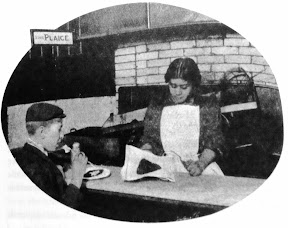
An example of this constructed and meaningful narrative lies in social history. In his work on the history of Fish and Chips, Panikos Panayi uses sensory detail to reconstruct the atmosphere of the past imaginatively. By citing contemporary sources about the distinctive smell of fish and chips, a smell linked by some to the Jewish community through anti-Semitism and to working-class life, Panayi does more than state a fact.[11] Panayi uses a collection of primary sources as evidence to evoke the reader’s imagination, building an empathetic and imagined bridge to the sensory reality of the past. This method guides the reader to use their own imagination, whilst making the past tangible through the careful selection of primary source material from Henry Mayhew and Charles Dickens to newspaper articles. For example, Panayi quotes Mayhew to emphasise the smell of the fish which anti-Semites also stressed: “The garments of the fried-fish sellers are more strongly impregnated with the smell of fish than were those of any ‘wet’ or other fish-sellers whom I met with.”[12]However, Panayi does not rely on a single source or an amalgamation of sources that becomes overly narrative. Instead, he employs additional sources with commentary, almost as a documentary reader. Demonstrating that, for much of the nineteenth century, newspaper and magazine articles portrayed images similar to those of Mayhew and Dickens, stating that these sources are “often in much stronger and more negative language.” Highlighting “the close link between fish and chips and the working classes and the issue of smell.”[13] Before introducing the following primary source that invokes the reader’s imagination in the author’s reconstruction of the past, “In addition, there was a sickening, vaguely familiar smell, which made me want to vomit. At last, I asked Mr Landon about this overpowering odour which we encountered in almost every building. ‘It’s mainly the smell of fish and chips and urine,” he answered.”[14]
Another example of this skilful re-telling is Marissa J. Fuentes’ description of a runaway slave named Jane from Bridgetown, Barbados. Nothing more is known of Jane in the archive, which is often the case for enslaved women, who are often described through the body and the scars they hold.[15] By shifting the focus from the single document, in this case, the runaway advert placed in the Barbados Mercury, Fuentes shifts the weight of the archival document. She uses maps and other primary source material to reconstruct Bridgetown’s topography and enable the reader to visualise the historical experience of enslaved women such as Jane, without erasing these women who lived and experienced slavery from historiography. Fuentes employs a re-telling of the past, allowing the reader to travel through Bridgetown guided by sensory detail. As readers we are encouraged to imagine the embodied experience of the enslaved despite the original source’s empirical description of her scars and the reward offered for her return. [16]
This methodology is supported by Roger Smith, who explains that the construction of narratives of all kinds involves the historical imagination. This imagination is at work in biography and autobiography, and in the representation of selfhood and identity, just as it is in academic history. [17] This last imagination differs in the discipline and formalised conventions with which we build primary sources into the narrative and assessment of explanations. This narrative within modern historiography, as Hayden White continues, “wishes to be strictly referential. Historiography by employing evidence and being referential demonstrates a wish to tell the truth and nothing but the truth about real persons, things and events which are past and no longer subject to direct perception.” Or, at a minimum reveal lies and dispel myths about the past, whilst also “constructing, by imagination and conceptualisation.”[18]
If imagination is vital for constructing historical understanding, the disciplined and referential application of this imagination is critical and timely in the contemporary period. Historians must not only employ imagination but also turn it upon the powerful, often unexamined, “imagined pasts” that circulate in contemporary society, shaping policy and public perception. For example, this critical and corrective role is illustrative of political and academic debates surrounding migration. Here, historians are uniquely positioned to use their disciplined imagination to challenge two stubborn and interlinked myths: first, the imagination of unprecedented newness of migration and second, the imagination of a static national identity.
The discussion around migration is marked by negativity, to the point that many would have the general public believe current migration trends are unprecedented.[19] Tony Kushner’s groundbreaking study of the history and memory of refugees in Britain argues that the contemporary British society, that he studied, used the alleged harmonious integration of past refugees as a stick to beat ‘problematic asylum seekers’. However, Kushner revealed that past refugees who fled to Britain had received the same hostile reception as ‘asylum seekers.’ While Kushner, in his research, wished to show how the memory of migrations changed over time, he also demonstrates similarities that have persisted over the past two centuries.[20] Whilst such similarities within historical migration trends are increasingly accepted amongst social scientists, the promotion of an imagined newness of migration persists, leading to a misrepresentation of the past.[21]Even where migration is accepted as a historical trend, many mistakenly view historical migration as ‘good’ and current migration as ‘bad’. Within historiography, recognition of these comparisons between old and new migrants is not new, and has been acknowledged since the 1970’s.[22]
In response to imagined views of both contemporary and historical migration, migrants have been subjected to increasing demands and decreasing rights over a long historical period.[23] The demands placed on contemporary migrants limit integration processes. This hindrance can be seen through historical imaginations that set exclusionary demands on migrants based on a contemporary understanding of traditional British values and cultural citizenship. A social phenomenon Benedict Anderson has theorised as the “imagined community” of the nation. This community is imagined because its members will never know most of their “community”, yet it is powerfully felt.[24] In political discourse, this imagined community is often retrofitted with a nostalgic, mythological set of “traditional values.” Values that are related to postcolonial melancholia after the end of the British Empire.[25] Meaning migrants are expected to integrate into cultural standards that do not exist, posing questions about how the past is remembered. A theme taken up in memory studies. Where the nostalgic memory of the past effectively excludes new migrants from integrating, since alongside temporal differences between groups, today’s nostalgic memory is accompanied by nativist ideas that migrants bring with them a ‘cultural threat.’[26] This shifts the framing of citizenship to an issue of cultural norms from one of civic, political and social rights and duties.[27]
Additionally, historians like Nancy Foner, through her “then-to-now” approach, reveal the paradox of imagination in public memory. A celebratory narrative of past immigration, for example, New York as a “city of immigrants”, can coexist with hostility towards present migrants. In such cases, the past is selectively imagined; earlier migrants are romanticised as hardworking pioneers, while contemporary arrivals are framed as a ‘cultural threat.’ [28]
It is up to historians not only to use imagination to reconstruct history but also to engage across disciplines to underscore the importance of how imagination is used in history. The historian’s corrective imagination thus carries a critical ethical charge. By replacing constructed myths with evidence-based narratives of long-term change, historians provide the essential foundation for more humane and realistic policies. This dual role mirrors the theoretical insights of Stuart Hall and Edward Said, who understood the importance of the imagination of geography and history, as both a necessary tool for constituting identity and meaning with an imaginative or figurative value that can be named or felt.[29]
Therefore, to conclude and answer the essay question, what role should imagination play in historical research? Historians must, on one hand, employ imagination constructively. It is the work of looking beyond the silences and the data of the NSO list,[30] of giving sensory texture to the social histories,[31] and sensory detail to the story of those without a voice in the archive, such as Jane, the woman who ran away from slavery in Bridgetown.[32] Without these acts of reconstruction, history remains a stale record, incapable of conveying the subjective reality of the past or provoking the reader’s imagination to encourage ethical and intellectual engagement. This imagination is disciplined, tethered to footnotes and evidence, but it is imaginative nonetheless. It answers the ‘so what?’ of history, changing historical record into meaningful discussion.
On the other hand, historians must subject imagination to critical scrutiny. This application of scrutiny is the work of analysing how the past is imagined in the public sphere, how it is mobilised in political speeches, entrenched in policy documents, and embedded in popular culture. When a politician presents an idealised past of social cohesion, or when a policy is justified by the alleged ‘unprecedented’ scale of an event, historians must use their understanding of evidence and contextual knowledge to intervene. Through this collective effort, historians can reconstruct the narrative of the past through imaginative correction, challenging nostalgic myths with evidence of historical complexity and contradiction. This application of scrutiny is not a departure from imagination, but an engagement with imagination on a meta-level, for example an engagement with imagination through the critical use of imagination itself. This enables historians to navigate the boundary between disciplined reconstruction and ideological reconstruction. This dual responsibility means that, as historians, we should always be engaged in this balancing act between employing imagination to reconstruct the past and remaining critical of existing reconstructions.
[1] NSO: Rep 430-201-16B/65-39-Bd.1. in Panikos Panayi, “The persecution of German Romanies: the case of Osnabrück, 1933–46”, Patterns of Prejudice 37, 4 (2003):377-399.
[2] Roger Smith, “Reflections on The Historical Imagination”, History of the Human Sciences 13, 4 (2000): 103.
[3] Andreas Boldt, “Ranke: Objectivity and History”, Rethinking History 18(4), (2014): 463.
[4] Hayden White, Metahistory: The Historical Imagination in Nineteenth-Century Europe, (Baltimore: John Hopkins University Press, 2014) 101.
[5] Ibid. 101-104.
[6] See, for example, Smith, “Reflections on The Historical Imagination”, 103-108, Boldt, “Ranke: Objectivity and History”, 458-9.
[7] Boldt, “Ranke: Objectivity and History”, 458-9.
[8] Edward Said, “Michel Foucault as an Intellectual Imagination”, boundary 2, (1972): 4-5.
[9] William H. Dray, History as Re-enactment: R.G. Collingwood’s Idea of History, (Oxford: Clarendon, 1995): 33; Dray, History as Re-enactment, 58.
[10] Stuart Hall, ‘Cultural Identity and Diaspora’, in Colonial Discourse and Post-Colonial Theory, edited by Patrick Williams and Laura Chrisman, (New York: Routledge, 1994), 392-403.
[11] Panikos Panayi, Fish and Chips: A History, (London: Reaktion Books, 2014), 78-82.
[12] Panayi, Fish and Chips, 80, Henry Mayhew, London Labour and the London Poor, vol. I (London, 1968), 168.
[13] Panayi, Fish and Chips, 80
[14] Ibid. 84; Sarah Elizabeth Francis, Ladybird Lane, (London 1962), 103–104.
[15] Marissa J. Fuentes, Dispossessed Lives: Enslaved Women, Violence and the Archive, (Philadelphia: University of Pennsylvania Press, 2016), 21–53.
[16] Fuentes, Dispossessed Lives, 34-37.
[17] Smith, “Reflections on The Historical Imagination”, 106-108; Boldt, “Ranke: Objectivity and History”, 457-474.
[18] Hayden White, “An Old Question Raised Again: Is Historiography Art or Science? (Response to Iggers)”, Rethinking History 4, 3 (2000): 392.
[19] Hein De Haas, Stephen Castles and Mark J. Miller, The Age of Migration: International Population Movements in the Modern World, (London: Bloomsbury, 2020), 34.
[20] Tony Kushner, Remembering Refugees: Then and Now (Manchester: Manchester University Press, 2006); Panikos Panayi, An Immigration History of Britain: Multicultural Racism since 1800 (Harlow: Pearson Education Limited, 2010), 1.
[21] Christophe Bertossi, Jan W. Duyvendak and Nancy Foner, “Past in the Present: Migration and the Uses of History in the Contemporary Era,” Journal of Ethnic and Migration Studies 47, 18 (2020): 4157–4160.
[22] Leo Lucassen, The Immigrant Threat: The Integration of Old and New Migrants in Western Europe Since 1850, (Urbana: University of Illinois Press, 2005), 1-14.
[23] See, for example, Patrick A. Taran, “Human Rights of Migrants: Challenges of the New Decade”, International Migration 38, 6 (2001): 3-141; M. Balkenhol, P. Mepschen, and J. W. Duyvendak, “The Nativist Triangle: Sexuality, Race and Religion in the Netherlands.” In The Culturalization of Citizenship. Belonging and Polarisation in a Globalising World, edited by J. W. Duyvendak et al. (London: Palgrave Macmillan, 2016), 97–112.
[24] Benedict Anderson, Imagined Communities: Reflections on the Origin and Spread of Nationalism, (London: Verso, 2006), 1-8.
[25] P Gilroy, Postcolonial Melancholia, (New York: Columbia University Press, 2004); Bertossi et al. “Past in the Present”, 4165–4166.
[26] Bertossi, et al. “Past in the Present”, 4158–4159.
[27] J. W. Duyvendak, The Politics of Home: Nostalgia and Belonging in Western Europe and the United States. (Basingstoke: Palgrave Macmillan, 2011), 87-93.; J. W. Duyvendak, P. Geschiere, and E. Tonkens, The Culturalization of Citizenship. Belonging and Polarisation in a Globalizing World. (London: Palgrave Macmillan, 2016), 1-21.
[28] Nancy Foner, “Immigration History and the Remaking of New York.” In New York and Amsterdam: Immigration and the New Urban Landscape, edited by N. Foner, J. Rath, J. W. Duyvendak, and R. van Reekum, (New York: New York University Press, 2014), 29-51.
[29] Hall, ‘Cultural Identity and Diaspora’, 392-403.; Edward Said, Orientalism, (New York: Random House, 1978), 55.
[30] NSO: Rep 430-201-16B/65-39-Bd.1. in Panayi, “The persecution of German”, 377-399.
[31] Panayi, Fish and Chips, 80
[32] Fuentes, Dispossessed Lives, 34-37.
 Bill’s History Blog
Leave a comment