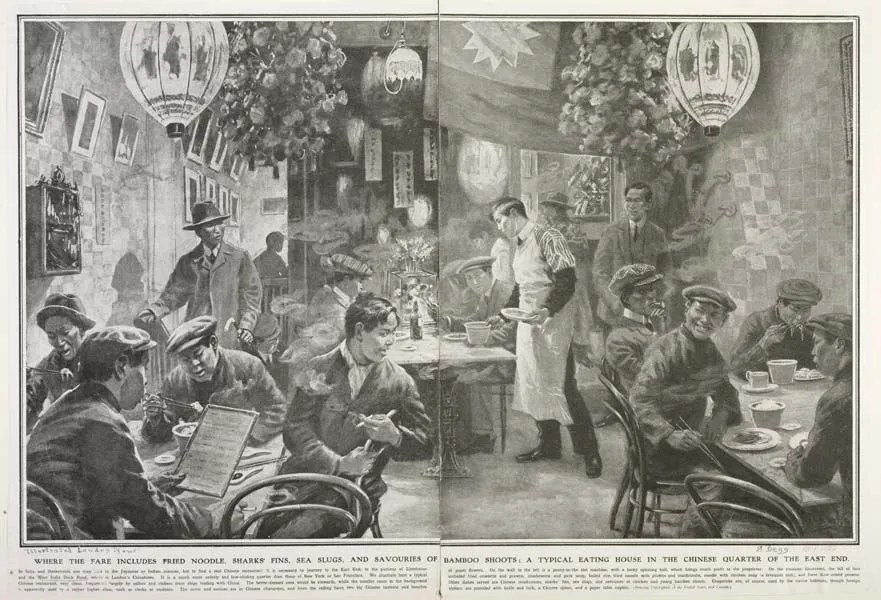
“We scheme for three meals per day, and for one sleep by night.”
M Sing Au
This blog post focuses on these early cookbooks, which largely focussed on female, middle-class American homemakers, and explores how their approach compared with the style and domestic authority of Mrs Beeton. It also highlights a small number of Chinese cookbooks aimed at British readers, including one particularly entertaining volume that guides readers on a tour of Chinese restaurants in 1930s London.
The publication of Chinese cookbooks for Western readers began as early as 1911, with one of the earliest examples being Jessie Louise Nolton’s Chinese Cookery in the Home Kitchen. In this book, Nolton emphasises ‘authenticity‘, stating that “none of the Chinese dishes permit of the substitution of strictly American ingredients.” The recipes that follow, include several varieties of chop suey alongside more elaborate dishes such as shark fin soup and bird’s nest soup.
Another example, is the 1924 The How Long Chinese Cookbook, which makes little attempt to distinguish between Chinese food as eaten in China and the dishes that had already become popularised in the United States. Instead, it reflects the growing popularity of foods such as chop suey, chow mein, and other “Oriental dishes”, which the book notes were “most popular among American housewives”.
Other, slightly later works took a different approach. In the 1945 cookbook How to Cook and Eat in Chinese, Buwei Yang Chao emphasised the distinction between ‘authentic’ Chinese cooking and the adapted Chinese American dishes commonly served in restaurants in the United States. She even advised readers that if they wished to request “real” Chinese dishes “a few dishes to eat in common with chopsticks”, then the restaurateur would recognise that they were, in fact, knowledgeable diners.
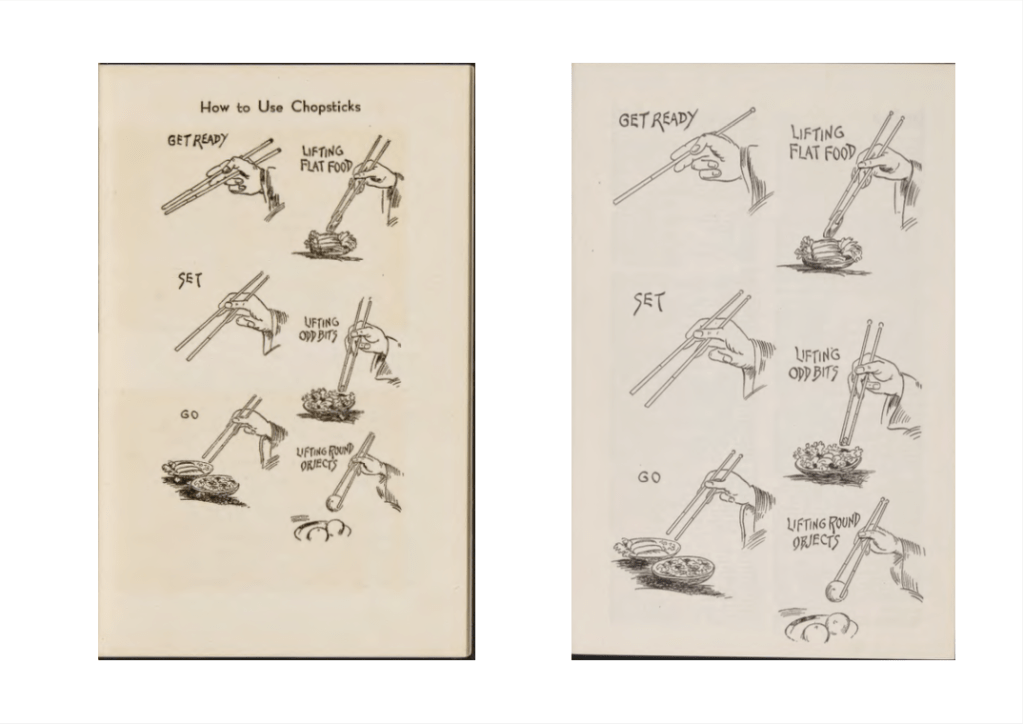
Whilst the understanding of what constitutes ‘Chinese food’ varies from book to book, these early cookbooks often followed a recognisable format. Many included instructions on table setting, correct mannerisms, and how to use chopsticks, with illustrations sometimes seemingly plagiarised from earlier publications. Examples of which can be found in M Sing Au, The Chinese Cook Book published in 1936 and Lilian Chao’s, The Kitchen God: A Chinese cookbook, published in 1948. Nevertheless, such sections emphasised that using the correct utensils was presented as an essential component of “real” Chinese cuisine.
Writing on this topic in Social Research, Yong Chen notes that Chinese American cookbook authors were keenly aware that their work was shaped by Western expectations. As Chen observes, these writers were not simply translating Chinese cookbooks or introducing Chinese cuisine directly to Western audiences. In fact, during this period no Chinese-food cookbook was directly translated from Chinese. Instead, these works represented a pioneering attempt to define and articulate Chinese cuisine for readers specifically unfamiliar with it. A fact acknowledged by the publishers note in publisher’s note in B.E. Read’s Chinese Foodstuffs and How to Use Them. The book, published in 1940, states: “It is radically different from all others available in China, in that it deals solely with Chinese products and the many ways in which they can be used to satisfy both the foreigner’s palate and his purse.”
Because these authors knew they were addressing non-Chinese audiences, they often felt compelled to explain Chinese cooking in systematic ways. Buwei Yang Chao’s book provides a striking example of this approach. As noted by Yong Chen she listed and explained in detail twenty different cooking methods: “boil, steam, roast, red-cook, clear-simmer, pot-stew, stir-fry, deep-fry, shallow-fry, meet, splash, plunge, rinse, cold-mix, sizzle, salt, pickle, steep, dry, and smoke.” In doing so, she provided Western readers with a comprehensive framework for the understanding and practice of Chinese culinary techniques.
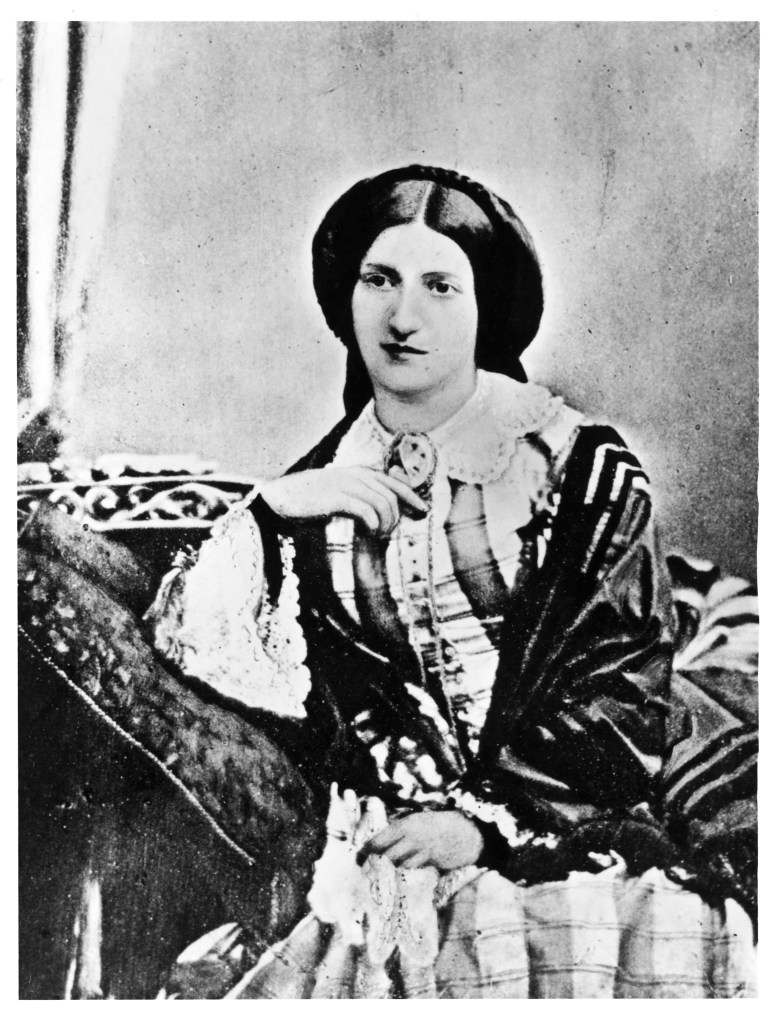
The approach taken in these works invokes comparison with the style of the nineteenth-century British household authority, Mrs Beeton. Historian Panikos Panayi, in Spicing Up Britain, describes Mrs Beeton’s famous 1861 publication Household Management as more than simply a recipe book, interspersing culinary instructions with discussions of etiquette, household organisation, and proper conduct. In a similar fashion, Chinese cookbooks written for western audiences, often followed this broader style. Rather than focusing exclusively on recipes, they also included explanations of dining customs, table manners, and culinary techniques, reflecting the assumption that their readers were unfamiliar with Chinese culture.
While much of the discussion so far has focussed on Chinese cookbooks produced for American audiences, several examples aimed at British readers also appeared during this period. Examples include, Townley Searle’s Stange Newes from China: A First Chinese Cookery Book published in 1932 and the Shanghai Restaurant: Chinese Cookery Book compiled by S. K. Cheng and published in 1936. Shanghai Restaurant specifically aimed at an audience that could buy all the ingredients required at the The Shanghai Emporium, at 6 Greek Street, London, W1, for the purchase of ingredients for all the recipes in the cookery book, from shark fin soup to chop suey.
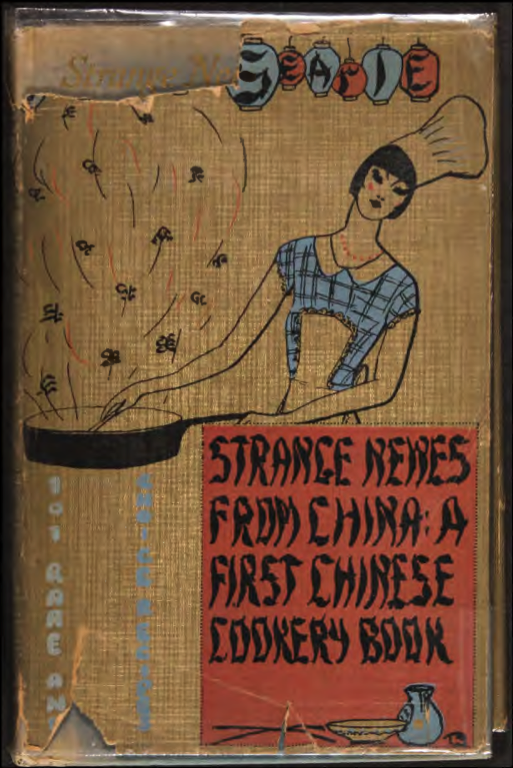
Townley Searle’s Strange Newes from China, however, is quite different in its approach and unrivalled in its entertainment value. The book takes readers on a tour of London’s Chinese eateries while frequently referencing the well-known Victorian authority on domestic management, Mrs Beeton. This playful comparison allows Searle to frame Chinese cookery as both exciting and as a refreshing alternative to the conventions of British domestic cooking.
Like other Chinese cookbooks written for Western readers, Searle promotes the excellence of Chinese cuisine while emphasising the freshness of dishes often prepared at the table. He repeatedly contrasts Chinese cooking with British culinary traditions. In one passage, he compares the many ways of cooking rice in Chinese cuisine with the relative lack of variety in British bread cookery. After “a careful perusal of the latest edition” of Mrs Beeton’s work, he jokes that the only uses for bread in English cooking appear to be bread-and-butter pudding and bread soup, recipes which, “without any disrespect to Mrs Beeton”, he describes as “of exceeding dullness”.
Despite this cheeky tone, Searle does not entirely dismiss Mrs Beeton. On the contrary, he still recommends “a course of Mrs Beeton to all gallivanting wives and sweethearts”. Through this overtly humorous style, Searle positions his book as something of an antithesis to the instructional domestic manuals represented by Mrs Beeton, and by extension other Chinese cookbooks that follow this style, while still acknowledging their influence.
It is no wonder that, through it’s unique approach and historical value, Townley Searle’s book is often cited in studies of Chinese food history in Britain, including Panikos Panayi’s Spicing Up Britain and my own undergraduate dissertation, ‘Sichuan to Soho: Chinese Migrants and Kung Pao Chicken’. Like many of the best food books, Strange Newes from China vividly evokes the reader’s imagination.
Beginning in Piccadilly, Searle guides readers through London’s Chinese restaurants, offering descriptions that read almost like a culinary travelogue. I have plotted this ‘travelogue’ on a map accessible via the link below. This map — created through Layers of London, a map-based history website developed by the Institute of Historical Research — demonstrates the approximate locations and route described by Townley Searle. The route offers a glimpse into an early geography of Chinese dining in London and suggests a potential trail that one could still explore today.
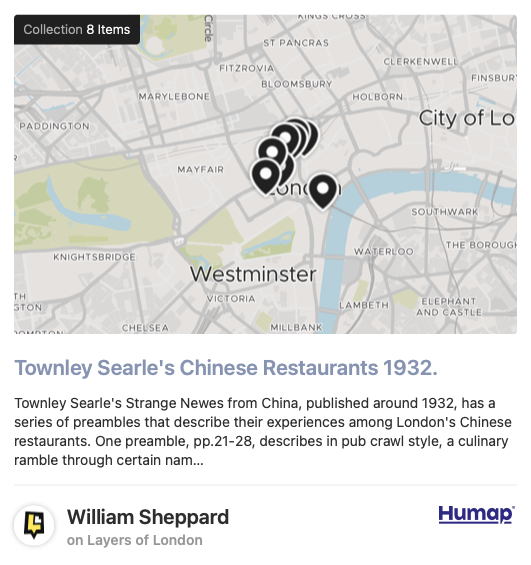
A contemporary ramble along this trail would also reveal how dramatically Chinese restaurants expanded in the near century that followed, particularly around Gerrard Street in Soho, which would in the 1950s become the location for London’s Chinatown.
Remarkably, Searle himself seems to anticipate this development. In one passage, he describes a dream in which Chinese restaurants appear across Britain. He looks forward to a time when places such as Galashiels and Wigan might boast establishments comparable to the “handsome and glorious emporia enumerated in this, the only true guide to celestial culinary excellence.” This seemingly prophetic dream of the nationwide success of Chinese cuisine has, over the course of the twentieth century, become a defining feature of Britain’s food landscape, with Chinese culinary excellence flourishing not only in restaurants but also on Britain’s bookshelves.
“What’s the trouble, O’ cook?
Chao Sun, 1727-1814
You’ve no millet in store!
Well, Ive written a book,
Which will buy us some more.”
 Bill’s History Blog
Leave a comment