Over the few last months, in the context of diasporic food in Britain, I have written the words ‘authentic’ and ‘authenticity’ many times. Within this process, I have begun to ask myself a series of questions: What is authentic food? Is our perception of authenticity linked to our understanding of a dish’s origin, its assigned national identity, or its ingredients and cooking methods? Or is the authenticity of a dish something far more flexible, something that adapts and changes over time?
Historically, the definition of ‘authentic’ has adapted and changed. The etymology of the word can be traced to multiple origins, partly borrowing from French and Latin. In Anglo-Norman, Middle French or Old French the term often referred to legal documents, echoing the latin authenticus. According to the Oxford dictionary, authentic means “genuine; not feigned or false” when referencing a document, artefact or artwork; concepts contemporarily tied to Western ideas of intellectual property. Another interpretation from the dictionary is that authenticity is the “actual thing or person; that rightly or properly bears the name.” Yet, none of these definitions serve to clarify what we mean when we apply concepts of authenticity to food.
To try and understand what authentic means in a gastronomic context, we should first understand how foods have been assigned national identities through the 20th and 21st centuries. Drawing from historian Professor Panikos Panayi’s book Spicing up Britain, in the era of post-war nationalism, food, like everything else, has been assigned a national identity. However, Panayi highlights that even at this nationalistic level there are conflicting interpretations. In the British context, for example, there is on one hand a simplistic view of British food, as a plain and traditional cuisine consisting of well done roast beef and soggy Yorkshire puddings. Whereas, on the other hand, a more multicultural viewpoint is emerging, which includes the rice noodles of Southeast Asia and the delicacies of the Mediterranean integrated within Britian’s culinary identity.
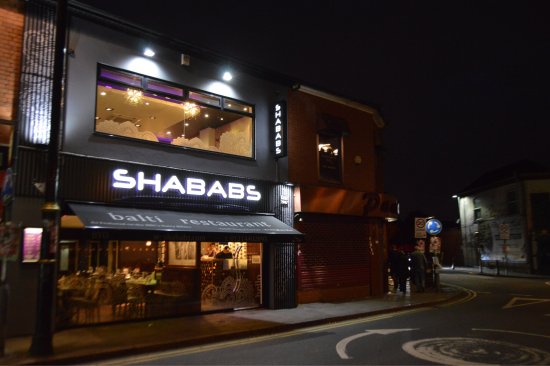
In modern Britain, a multicultural viewpoint holds significance. Throughout the latter half of the 20th century and into the 21st century, Chinese and Indian restaurants have become woven into the social fabric of rural and urban Britain. Such restaurants often offer anglicised versions of diasporic food, adapted to suit the British palate. Whilst on some occasions this adaptation becomes invention, a prime example of which, is the balti; an original dish created in Birmingham during the 1970’s. The balti has become so iconic that the area it appeared —between Balsall Heath and Sparkhill, home to one of the largest Pakistani Kashmiri migrant populations in Britain — has long been known as the ‘Balti Triangle’. Meanwhile, the dish’s success has enabled the emergence of businesses such as the Birmingham Balti Bowl Company.
Although, we may go on to ask, can we ever label an adapted or invented dish as authentic? And if so, is it the ingredients or cooking methods that influences our perception of authenticity? By taking a longer-term historical view, we can attempt to answer these questions.
J.A.G Roberts, In his book China to Chinatown demonstrates how certain foods become integrated into a ‘national’ cuisine. Roberts explains that foreign-introduced crops to China, such as Irish potatoes, maize and peanuts were initially labelled as “fan” (foreign or barbarous), yet they became naturalised in Chinese cuisine over time. For example, the potato, now widely consumed across China, was once unknown to Chinese chefs. Instead, it spread widely in the Qing dynasty(1644–1911). This interchange between foreign origin and localised adaptation highlights the fluidity of authenticity, which can be applied to diasporic contexts such as restaurants in Birmingham’s Balti Triangle or across Britain’s Chinese restaurants or takeaways.
This process of global culinary interchange demonstrates that authenticity is not an inherent quality but a negotiated and socially constructed concept. The balti is an example of this process, its ‘naturalisation’ within Birmingham and the South Asian community that migrated to the city, shows how food evolves across different culinary landscapes, through migration, adaptation and cultural interaction. While further demonstrating that the diasporic construction of a dish — its cultural significance, its role in providing a means of economic survival for migrant communities, and its vast enjoyment by the British public — holds as much significance in determining ‘authenticity’ as the migratory history of its ingredients and cooking methods.
However, even if we determine authenticity based on the flexible criteria outlined above, one question remains. If, for example, Indian migrants, adapt the food they serve in their host society, does that food become authentically British, authentically Indian, or authentically Indian British?
After spending a lot of time seeking an answer to this question, I am no longer convinced that providing a definitive answer really matters. The point is, that authenticity remains vague, fluid and flexible. As migrants, over time, integrate into new societies introducing new ingredients, techniques and flavours, at the same time their host societies also adapt embracing new flavours and innovations. In this integration process, we witness and taste the ongoing exchange of ideas and identities, which is perhaps, the most authentic thing of all.
 Bill’s History Blog
Leave a comment