The Significance of Wholesalers to Chinese Restaurants

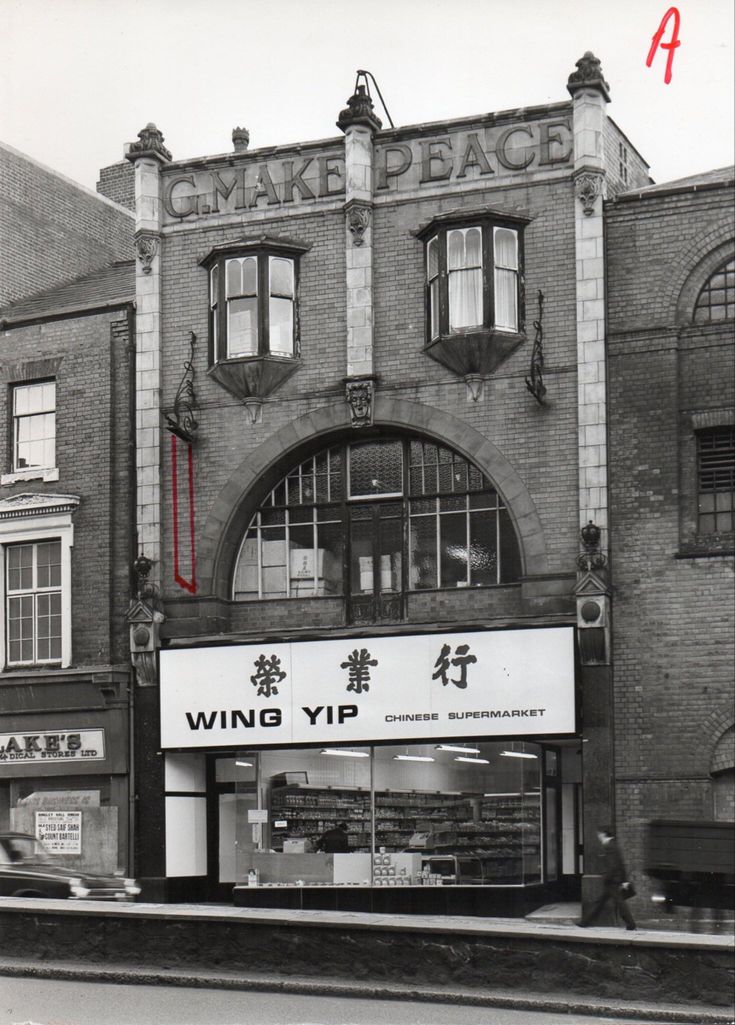
Recently, a journalist from the Birmingham Dispatch contacted my university supervisor and tutor Professor Panikos Panayi. The journalist was interested in exploring the legacy of Wing Yip supermarkets in the city [Birmingham, UK]. Due to my recently submitted dissertation entitled ‘Sichuan to Soho: Chinese Migrants and Kung Pao Chicken’, Panikos put the journalist in contact with me and I provided him with a summary of the significance of wholesalers to Chinese restaurants.

The piece was published, and although it did not utilise much of what I had written, it was nonetheless an interesting read. The article focused on Wing Yip and questioned whether Woon Wing Yip’s business empire is in decline. It explored the company’s impact, or lack of, on the local residents of Nechells, while also highlighting reduced philanthropic contributions to the Birmingham Chinese community and the declining profits of Wing Yip. However, it did not address the long-term impact that wholesalers like Wing Yip have had. 

You can read the article here: https://www.birminghamdispatch.co.uk/woon-wing-yip-empire-decline/

Therefore, I feel that through my blog, that this is a good opportunity to share the summary I wrote for the journalist and also highlight some points worth considering when reading the article; by taking a longer-term view of Wing Yip Supermarkets.

Here is the summary I provided:

Wing Yip, dubbed initially as ‘a supermarket with dried squid on the shelf’, opened in May 1970 on Digbeth High Street and sold a range of imported produce from Hong Kong, Malaysia, Thailand and Singapore, such as preserved duck eggs, dehydrated fish and melon seeds.

In the same year, the 1970 Yellow Pages business directory for Birmingham indicated that there were at least 45 Chinese restaurants in the Birmingham area, a small but ready and expanding catering market for ex-restaurateur Yip to provide with produce. Comparatively, In London, the number of restaurants listed in the Yellow Pages stood at a minimum of 432, a vastly larger number, which would not have been sustainable without existing restaurant and wholesaler structures in place. This is a structure that dates back to as early as 1936, through the earliest Chinese supermarkets in London, such as The Shanghai Emporium on Greek Street. Ultimately, creating the right conditions for the rapid growth of the takeaway in post-war London.

Paradoxically, many restaurateurs in Birmingham, along with other restauranteurs from other regions, had to travel long distances to buy groceries from supermarkets in London. The early period of Wing Yip demonstrates the importance of structure to restaurateurs through a catering supply chain. For example, just four months after opening, Wing Yip said, “Now I have customers coming to Birmingham from Derby, Nuneaton, Worcester, Malvern, and even North Wales.”

Additionally, most Chinese migrants from before 1981 originated from Hong Kong, which led to a Cantonese-Western hybrid of Chinese restaurants aimed at the British Market. However, post-1981 migration trends shifted heavily towards an increasing number of mainland Chinese migrants, alongside smaller numbers of migrants from Taiwan or Macau, adding flavour and diversity to the Chinese diaspora. This shift, in turn, is reflected in the emerging restaurants that offer more ‘authentic’ foods, which subsequently require an increasing range of ingredients not readily available through wholesalers or supermarkets that cater to the British market. 

Therefore, the continued growth of Wing Yip again demonstrates the importance of food supply chains in meeting the growing demand for Chinese food in post-war Britain. Initially starting as a small supermarket, then moving to a larger store and warehouse on Coventry Road no later than 1977, before again outgrowing its premises and in 1992 moving to its current location in Nechells. This growth also parallels the development of Chinatown in Birmingham, which was officially recognised in the 1980s. The area, now known as the ‘Chinese Quarter’ – where you can find Cantonese, Sichuan, Japanese, Korean, Taiwanese, Malaysian and Vietnamese cuisines as well as ‘Day In supermarket’ – now has over 40 restaurants, perhaps as many as the whole of Birmingham in 1970 when Wing Yip first opened.

Quite simply, without the infrastructure provided by Chinese supermarkets and wholesalers like Wing Yip, the history of the Chinese community in Birmingham, the impact of the city’s Chinese Quarter, and the growing diversity of the Brummie palate would not nearly be as vibrant.

Through my writing, my positive outlook on the long-term growing diversity of Britain’s culinary landscape is transparent, an outlook that stands in contrast to the article published in the Birmingham Dispatch , which takes a more short-term perspective by suggesting a decline in wholesalers such as Wing Yip.

In the article, two separate but related points are made, though they are not explicitly linked. First, it highlights a drop in philanthropic donations from £97,000 to £50,000 over the past year. Second, it notes a decline in Wing Yip’s profits, down by £5 million between 2023 and 2024. It would not be surprising for these two developments to be connected. While the reduction in charitable giving is unfortunate, it is reasonable to hope that if profits increase, philanthropic contributions can return to previous levels. After all, a business needs to be profitable if it is to make philanthropic donations.

Interestingly, the article highlights that Wing Yip’s past charitable efforts have been largely directed toward the Chinese community. These include his donation of the pagoda to Birmingham, funding for the Birmingham Chinese Festival, and support for the Birmingham Chinese School. However, it is not uncommon for migrant groups to focus their philanthropy on their own communities. As Panikos Panayi outlines in his book Immigration, Ethnicity and Racism in Britain, earlier and larger migrant groups such as Germans, Jews, and Irish all developed philanthropic societies that primarily served their own communities.

It is also important to recognise that the Chinese diaspora in Britain is far from monolithic. People who identify as Chinese have emigrated from different parts of China and Southeast Asia, often divided by language, regional cultures, and experiences. Moreover, the dispersion of Chinese entrepreneurs, particularly in the catering industry, to villages, towns and cities across the UK has resulted in a spatial fragmentation within an already culturally diverse community. This has undoubtedly contributed to the Chinese in Britain struggling to form a unified collective voice. In the absence of sustained public or governmental engagement, it is unsurprising that individuals like Wing Yip have stepped in to support their communities through private philanthropy. 

Indeed, this poses questions that warrant further research, one might ask: Is such philanthropy a vehicle for transmitting unified ‘Chinese values’ onto a diverse group? Or has Wing Yip seized the opportunity to assert a form of cultural and educational influence within the Chinese community in Britain, contributing to the shaping of its perceived and evolving identity in a society where it has often been overlooked? And if so, has this strategy changed? 

However, the decline in profits appears concerning, and the article frames this as an indication of overall decline. However, somewhat paradoxically, it also highlights the impact of a new cold storage warehouse on local residents. The article fails to highlight that the company accounts of W.WING YIP PLC reveal that in January of this year, Wing Yip entered into a contract for the demolition of older buildings on the site and the construction of this new cold storage facility, valued at approximately £11.5 million. Additionally, looking at company accounts in more detail, in October 2023 Wing Yip spent over £1 million on refurbishing Birmingham Offices and installing solar panels on the site.

Such significant investments stand in stark contrast to the idea of a business in decline. Instead, they reflect a business with the confidence to invest substantial sums into its Birmingham site and remain firmly rooted in Nechells.

Interestingly, the Birmingham Dispatch  article refers to the perceived decline of Wing Yip from a cultural angle as well as from a financial position. This cultural decline is described as the fading of a “touchstone” for the Chinese community, pointing to the closure of the once popular on-site buffet, Wing Wah. This can perhaps be explained, as Wing Yip has expanded to other locations in Manchester, Croydon, and Cricklewood. These new sites provide the structure and convenience for restauranteurs across the UK, reducing the need for longer distance travel and increasing convenience. Ultimately, this has diminished the sense of visiting Wing Yip as an event.

Therefore, the closure of Wing Wah, is perhaps a paradox of Wing Yip’s success, which provided the structure for the growth of Chinese restaurants in urban centres and across wide regions of Britain. Cities like Birmingham, Manchester, and London now boast thriving Chinatowns and an abundance of Chinese dining options. Visitors to Wing Yip sites, including restauranteurs can more easily access ‘authentic’ Chinese food locally, rather than relying on the anglicised offerings of Wing Wah, dishes that many may already be producing in their own takeaways offering British Chinese hybrids such as sweet and sour chicken.

In conclusion and in response to the Birmingham Dispatch article on the supposed decline of Wing Yip, I offer a longer-term perspective on its significance, specifically to the Chinese community in Britain. Rather than a business in retreat, Wing Yip’s continued investment and expansion reflect its vital role in shaping Britain’s Chinese culinary infrastructure and identity. 

Comments

Leave a comment